Trucks in France: The new 44-ton regulation for sustainable vehicles
In a move aimed at promoting sustainability and reducing the environmental impact of road transport, France has announced it will limit the maximum permitted weight for trucks to 44 tonnes, starting in October 2025. However, this restriction will only affect trucks that do not meet certain eco-friendly specifications, which could have significant implications for logistics and international transport fleets.
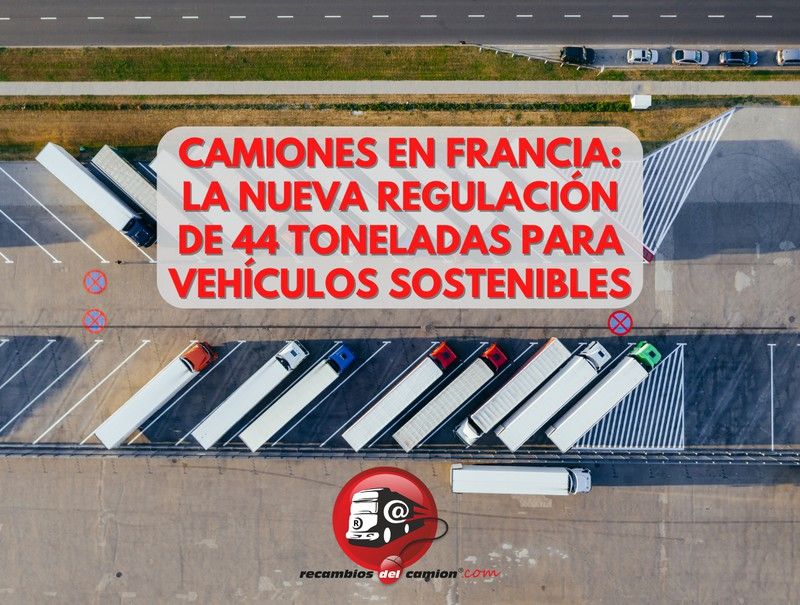
From October 1, 2025, only the most modern trucks will be allowed to operate with the maximum load limit of 44 tonnes. This includes vehicles registered after 2014 and that comply with Euro 6 emissions standards. This category refers to trucks with a high level of energy efficiency and lower pollutant emissions, which are key to Europe's strategy for transitioning to more sustainable transport.
Until the aforementioned date, trucks registered from 2009 onwards that comply with Euro 5 regulations will also be able to continue transporting the 44 tonnes, but this exception will no longer apply after September 2025. This means that many older trucks will have to reduce their maximum permissible load or face stricter restrictions.
France's initiative is part of a broader effort by the European Union to reduce CO2 emissions from road freight transport. The heavy-duty transport sector is responsible for a significant portion of greenhouse gas emissions in Europe, and regulations limiting the maximum weight of trucks are designed to incentivize the use of greener, more sustainable vehicles.
By restricting the maximum weight to trucks that meet the strictest standards, French authorities are seeking to promote the renewal of transport fleets with more modern, less polluting models. This also has a direct impact on companies' operating costs, as older trucks, which will not be eligible for the 44-ton limit, will have to operate with lower load capacities, resulting in more trips or the need to invest in new vehicles.
Another relevant aspect of this regulation is that it will not only affect conventional trucks. Electric trucks and those involved in intermodal operations (those that combine road transport with other modes such as train or ship) will be able to continue operating with a maximum weight of 44 tons, regardless of their registration year. This provides an additional incentive for companies to adopt cleaner transportation alternatives, as these exceptions will allow them to maintain the same load capacity as more modern and efficient trucks.
The impact of this regulation will be considerable, especially for international transport companies operating in France. Those with older vehicles will be forced to reconsider their investments in fleet modernization or adjust to the new load limitations.
Some industry experts see this measure as a first step toward greater standardization of weight and dimension regulations within the European Union. The 44-ton limit is a benchmark in several European countries, but the difference in regulations across borders remains a challenge for companies operating internationally. These types of regulations could pave the way for greater harmonization in EU regulations.
Furthermore, the focus on electric trucks and intermodal transport reinforces the European trend toward more sustainable mobility solutions. For carriers, this could translate into greater incentives to invest in electric or hybrid vehicles, which, in the long term, could also represent a competitive advantage.
Fleet modernization not only affects transport companies, but also those sectors that depend on truck maintenance. Truck spare parts companies, like ours, will benefit from the increased demand for parts for Euro 6 and electric vehicles, which will now be at the heart of transport operations in France.
Companies must prepare to offer solutions adapted to new models, as well as maintain a constant supply of spare parts for those vehicles that, while they will comply with regulations until 2025, will soon be replaced. Spare parts that improve energy efficiency or reduce emissions will also see greater demand, and it is key that suppliers in the sector are prepared for this change.
With the 2025 deadline providing limited time to adapt, transport companies should start planning their fleet renewal strategy now. This includes assessing the condition of current vehicles, exploring financing options for Euro 6 or electric trucks, and considering the implementation of intermodal solutions that can benefit from regulatory exemptions.
Furthermore, for companies operating internationally, it is crucial to stay abreast of potential regulatory changes in other European Union countries, as other nations are likely to follow France's lead in regulating maximum permissible weights.
France's decision to limit truck weights to 44 tons for the most modern vehicles represents a step toward greater sustainability in road freight transport. While this presents a challenge for transport companies, it also opens up opportunities for fleet modernization, the adoption of new technologies, and the integration of greener solutions. Aftermarket companies will also be positively impacted, as demand for parts for Euro 6 and electric trucks is likely to increase.
Other related articles
 Aug. 24, 2026
AI-powered cameras in Catalonia: Distraction controls on the A-2 and AP-7
For a professional driver, maintaining their license points and avoiding penalties is … Aug. 5, 2026
Solar eclipse 2026: traffic restrictions update
Traffic restrictions planned for the total solar eclipse on August 12, 2026, … July 22, 2026
2026 Solar Eclipse: Traffic Restrictions and Special Measures
The total solar eclipse of August 12, 2026, will be one of … July 10, 2026
Will breathalyzers be mandatory in 2026? Which vehicles are required to have them?
In recent days, numerous news reports have claimed that, from July 7, … June 15, 2026
Opinions of our clients
Receive our news