Historic trucks that shaped road transport
Road transport is one of the cornerstones of the modern economy. Every day, thousands of trucks travel roads and highways transporting food, materials, machinery, and all kinds of products necessary for the operation of businesses and cities. Without these vehicles, much of the logistics chain simply couldn't function. 🚛
Throughout history, many truck models have existed, but some have managed to stand out above the rest. Whether for their power, reliability, design, or the innovations they introduced, certain models have left a significant mark on the transport sector.
Many haulers remember these trucks as true icons of their time. Some were especially popular for decades, while others marked a turning point in the way trucks were designed and used.
In this article, we review some of the most famous trucks in the history of road transport and the reasons why they became such renowned models.
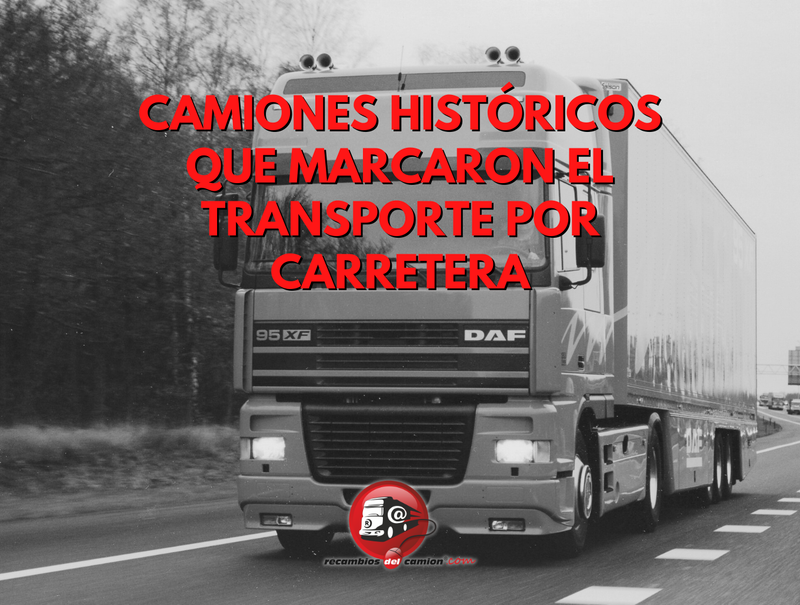
Trucks have changed enormously since their earliest versions. The first motorized transport vehicles appeared in the late 19th and early 20th centuries, when manufacturers began adapting engines to vehicles designed to carry cargo.
During the first decades of the 20th century, trucks were relatively simple, with modest engines and limited load capacity.
However, as trade and industry grew, so did the need to transport goods more quickly and efficiently. Over the years, manufacturers began to improve various aspects: more powerful engines, greater load capacity, safer and more comfortable cabs, better braking systems, and greater fuel efficiency. From the 1970s and 80s onwards, truck design also began to focus on driver comfort, essential for those who spend many hours or even days on the road. This evolution resulted in models that defined an era in transportation.One of the most important trucks in the history of European transport is the Volvo F12, introduced in 1977 by the Swedish manufacturer Volvo.
This model represented a major advance over previous generations, especially in aspects related to safety, ergonomics, and engine access.
One of its most outstanding features was the tilting cab, which allowed the entire cab to be tilted forward for easy access to the engine. This greatly facilitated maintenance and repair tasks, something highly valued by workshops and transport companies.
The Volvo F12 also introduced significant improvements in driver comfort, something that was becoming increasingly important in long-distance transport.
For many years, this model was widely used in international transport and became a common sight on European roads.
Another highly remembered model in the world of transport is the Scania 143, which was part of Scania's Series 3, launched in 1987.
This truck became especially popular during the 1990s and was one of the most appreciated models by many haulers, particularly on long routes and in heavy transport.
One of the keys to its success was its 14-liter V8 engine, which offered very high power for the time. This allowed it to move large loads with ease and handle demanding journeys without problems.
In addition to its power, the Scania 143 was known for its reliability. Many drivers highlighted that it was a robust truck, capable of covering hundreds of thousands of kilometers with proper maintenance.
Another aspect that made it a very recognizable model was the characteristic sound of its V8 engine, which is still remembered today by many truck enthusiasts.
Among modern trucks, one of the most influential models has been the Mercedes-Benz Actros, first introduced in 1996.
Since its launch, this truck has gone through several generations, each incorporating new technologies designed to improve safety, efficiency, and driver comfort.
The Actros was one of the models that spurred the integration of advanced electronic systems in trucks, something that is now commonplace in the industry.
Over the years, various driver assistance systems have been introduced to help the driver in complex situations and contribute to improved road safety.
Much work has also been done to improve fuel efficiency, which is crucial for transport companies.
The Actros cabs are designed to offer greater space and comfort, which is especially important for drivers on long-haul routes.
The Volvo FH, launched in 1993, is one of the most important models in road transport in Europe.
Since its market debut, this truck has been one of Volvo's best-selling models and has received the international Truck of the Year award, given by specialized journalists in the sector, on several occasions.
The Volvo FH stands out for its combination of power, reliability, and efficiency. Its engines are designed to offer good performance with optimized fuel consumption, something key for transport companies.
Another highly valued aspect of this model is the comfort of its cab. Drivers who travel long distances need adequate space to rest during breaks, and Volvo has worked extensively to improve ergonomics and interior design.
Thanks to these features, the Volvo FH remains one of the most widely used trucks in long-haul transport today.
The Scania R-series, introduced in 2004, is another well-known model in the heavy transport sector.
This truck has earned a strong reputation among haulers and logistics companies thanks to its performance, reliability, and high-quality finish.
Versions equipped with V8 engines are especially valued in heavy haulage, as they offer very high power and good performance on demanding routes.
In addition, Scania is known for paying close attention to the interior design of its cabs. The aim is to provide the driver with a comfortable and functional environment for working long hours.
The R-series has also received international awards related to design and innovation within the transport industry.
The DAF XF is another model that has become a benchmark in European transport. The XF range first appeared in 1997 with the XF95 model and has since evolved through several generations.
This truck is especially popular with companies involved in international transport, where vehicles constantly travel long distances.
One of its strengths is its fuel efficiency, crucial in a sector where fuel represents one of the largest operating costs.
The DAF XF cabs also stand out for their spaciousness and comfort. They are designed to offer adequate space for rest during breaks, essential for drivers who spend many days on the road.
Thanks to these features, the DAF XF has established itself as one of the most widely used trucks in European transport.
For many drivers, the truck is not just a work tool. It's also an important part of their daily lives.
Truck drivers spend many hours on the road and develop a very close relationship with their vehicle. That's why it's common to see trucks customized with special paint jobs, accessories, or additional lighting.
In many countries, truck rallies and events are also held, where drivers showcase their vehicles and share experiences with other professionals in the industry.
At these gatherings, it's common to see both modern trucks and restored classic models, demonstrating the passion that exists for these vehicles.
Despite technological advancements and the emergence of new models, many classic trucks are still on the road today.
Some continue to work for small businesses or on local routes, while others are preserved as historic vehicles.
Truck enthusiasts often restore these vehicles to keep them in good condition and preserve an important part of transportation history.
Seeing one of these classic trucks on the road is a way to remember how the industry has evolved over the years.
Regardless of the model or age of the vehicle, all trucks require maintenance and parts replacement over time.
The intensive use these vehicles undergo causes wear and tear on many components. Elements such as filters, brakes, suspension systems, and engine parts must be inspected and replaced when necessary.
Using quality replacement parts is essential to ensure the truck's proper functioning and prevent breakdowns that could lead to unexpected downtime.
For transport companies, maintaining the vehicle in good condition is not only a matter of safety but also of profitability. A truck out of service means losses of time and money, so having the right parts at the right time is key.
The road transport sector is constantly evolving. Manufacturers continue to develop new, more efficient, safer, and more technologically advanced models.
However, the trucks that defined an era are still remembered by many professionals in the sector. Models like the Volvo F12, the Scania 143, the Volvo FH, and the Mercedes-Benz Actros represent different stages in the evolution of transport.
Each of them contributed to improving the performance, safety, and comfort of the trucks that travel thousands of kilometers every day.
As long as the roads remain full of trucks transporting goods from one place to another, the story of these vehicles will continue to unfold kilometer by kilometer. 🚛
Other related articles
 Aug. 24, 2026
AI-powered cameras in Catalonia: Distraction controls on the A-2 and AP-7
For a professional driver, maintaining their license points and avoiding penalties is … Aug. 5, 2026
Solar eclipse 2026: traffic restrictions update
Traffic restrictions planned for the total solar eclipse on August 12, 2026, … July 22, 2026
2026 Solar Eclipse: Traffic Restrictions and Special Measures
The total solar eclipse of August 12, 2026, will be one of … July 10, 2026
Will breathalyzers be mandatory in 2026? Which vehicles are required to have them?
In recent days, numerous news reports have claimed that, from July 7, … June 15, 2026
Opinions of our clients
Receive our news