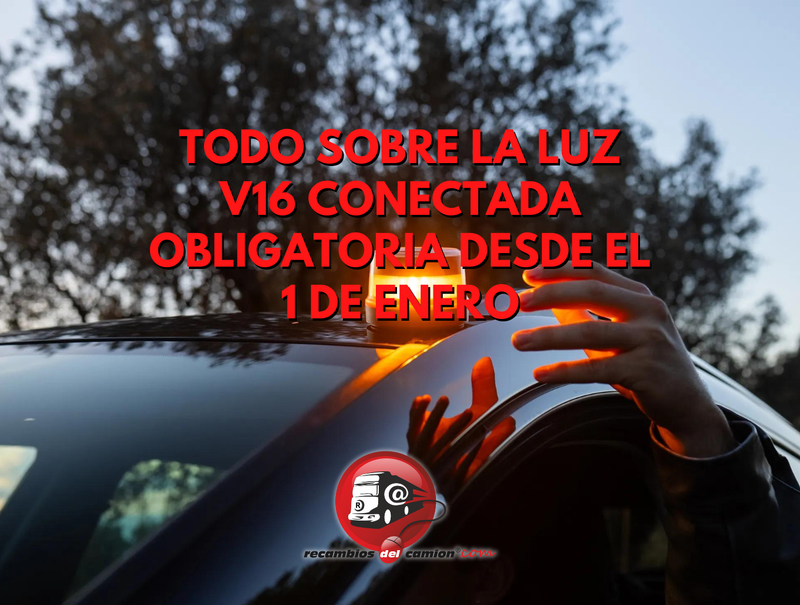
The connected V16 light is a beacon placed as high as possible on the immobilized vehicle, emitting a flashing yellow signal, visible in 360 degrees and from over a kilometer away. The main innovation compared to previous models is its ability to automatically connect to the DGT 3.0 platform, sending the vehicle's exact location in real time and anonymously. This allows other drivers and emergency services to be alerted to the presence of a stopped vehicle on the road.
The decision to replace the warning triangles with connected V16 lights is based on safety considerations. Installing the triangles requires the driver to exit the vehicle and walk along the road, which increases the risk of being hit, especially on fast roads or roads with poor visibility. With the V16 light connected, the driver can signal their position without having to exit the vehicle, significantly reducing the risk of accidents.
Although the use of unconnected V16 lights has been permitted as an alternative to triangles since July 2021, from January 1, 2026, all vehicles will be required to have a connected V16 light approved by the DGT. Until that date, triangles or unconnected V16 lights can continue to be used, but from then on, only connected V16 lights will be valid.
According to current regulations, connected V16 lights must meet the following requirements:
- Connectivity: They must be connected to the DGT 3.0 platform, sending the vehicle's location in real time and anonymously.
- Visibility: Emit a flashing yellow light, visible in 360 degrees and more than one kilometer away, even in adverse weather conditions.
- Autonomy: Have a battery with a minimum autonomy of 30 minutes in emergency mode and a useful life of at least 18 months.
- Placement: Be able to be placed on the highest possible part of the vehicle, preferably on the roof, and remain stable on a flat surface. If it is not possible to access the roof, they must have a fixing system, such as a magnet, that allows them to be placed in another part of the vehicle, such as the driver's door.
- Approval:Have a visible and legible approval code, which guarantees that the device complies with the requirements established by the DGT.
The DGT recommends keeping the V16 light connected in an accessible location inside the vehicle, such as the glove compartment, so it can be used quickly in an emergency. It's important to ensure the battery is in good condition and replace it when necessary to ensure proper operation.
As of January 1, 2026, failure to have a V16 light connected and approved by the DGT will result in a fine. Furthermore, in the event of a breakdown or accident, not having this device can put the safety of the driver and other road users at risk.
At Recambios del Camión, we have the OSRAM V16 connected emergency light, approved by the DGT and ready for use:
- Guaranteed connectivity: Automatic connection to the DGT 3.0 platform, sending the vehicle's location in real time.
- High visibility: Flashing yellow auto light, visible in 360 degrees and from more than a kilometer away.
- Easy installation: Compact design and magnetic fixing system for quick and secure installation.
- Autonomy: Battery with a minimum autonomy of 30 minutes in emergency mode and a useful life of at least 18 months.
- Approval: Visible and legible approval code, which guarantees compliance with the requirements established by the DGT.
More information and purchase here 👉See connected OSRAM V16 light in our store
The incorporation of the connected V16 emergency light as a mandatory device from January 1, 2026, represents a significant advance in road safety. This device allows the presence of a stopped vehicle on the road to be signaled quickly and safely, reducing the risk of accidents and improving the response of emergency services. Anticipating this obligation and purchasing an approved connected V16 light is a responsible decision that contributes to the safety of all road users.



Opinions of our clients
Receive our news