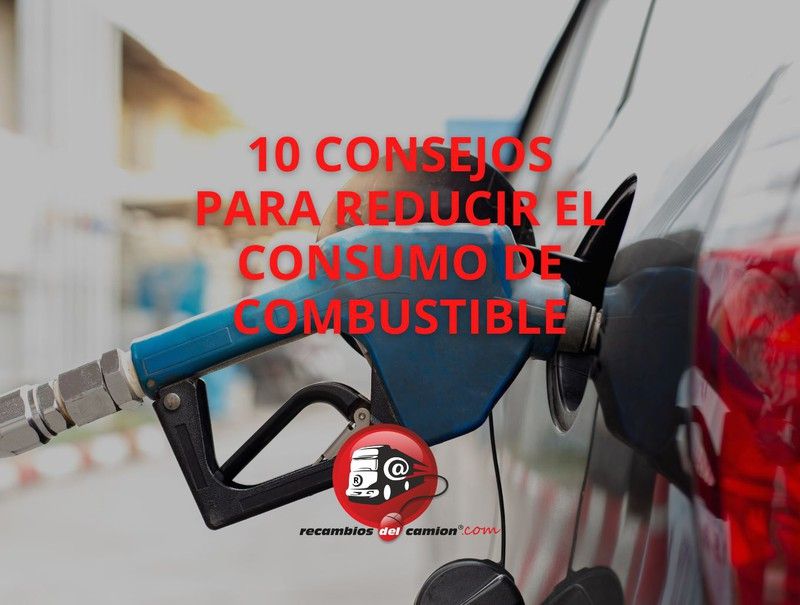
10 tips to reduce fuel consumption
The cost of fuel can be a big part of a driver's monthly budget. However, there are ways to save fuel by driving efficiently. In this article, we will discuss the best driving practices to save fuel and reduce fuel costs.
Driving at a steady speed is one of the best ways to save fuel. When you drive at high speed, your vehicle uses more fuel to maintain that speed. On the other hand, driving at a lower constant speed can reduce fuel consumption. It is recommended to maintain a constant speed of 60 to 80 km/h to save fuel.
Excessive use of the accelerator and brake can significantly increase fuel economy. By accelerating and braking hard, your vehicle uses more fuel to maintain its speed. Therefore, it is important to drive smoothly and avoid harsh acceleration and braking.
Air conditioning consumes additional energy, which increases fuel consumption. Therefore, it is important to use the air conditioner sparingly. When possible, open the windows instead of using the air conditioning. If you must use the air conditioner, set the temperature to a comfortable level and avoid using the defrost function.
Properly inflated tires can improve fuel efficiency. If the tires are over inflated or set too low, they can increase rolling resistance and consume more fuel. Therefore, it is important to check tire pressure regularly and keep them properly inflated.
Additional weight on the vehicle can increase fuel economy. Therefore, it is important to reduce unnecessary weight in the vehicle. This includes removing unnecessary items, such as tools or unused luggage, from the vehicle.
The manual transmission is more fuel efficient than the automatic transmission. The manual transmission allows the driver to control vehicle speed and gear shifting, which can improve fuel efficiency. However, it is important to note that driving a vehicle with a manual transmission requires more skill and knowledge than driving a vehicle with an automatic transmission.
Congested traffic can significantly increase fuel consumption. When driving in congested traffic, you are more likely to have to accelerate and brake hard, which increases fuel consumption. Therefore, it is important to avoid congested traffic and look for alternative routes to reduce fuel consumption.
There are technologies available that can improve the fuel efficiency of your vehicle. For example, fuel injection systems, cruise control systems, and engine management systems can improve fuel efficiency. It's important to research the available technologies and consider options that fit your needs and budget.
Regular maintenance can improve the fuel efficiency of your vehicle. For example, a regular oil change can keep the engine in good condition and improve fuel efficiency. It's also important to regularly check tire pressure, coolant level, and wheel alignment to improve fuel efficiency.
Hybrid and electric vehicles are more fuel efficient than conventional vehicles. In addition, these vehicles emit fewer emissions and can be more environmentally friendly. If you're looking to reduce fuel consumption and emissions, it's important to consider purchasing a hybrid or electric vehicle.
In conclusion, there are many ways to save fuel by driving efficiently. From maintaining a steady speed and avoiding excessive use of accelerator and brakes, to considering the purchase of a hybrid or electric vehicle, there are several factors to consider to improve fuel efficiency. It is important to research and consider all available options to determine which options work best for your individual needs. Ultimately, driving efficiently will not only save money on fuel, but will also be friendlier to the environment and help preserve natural resources for future generations. Therefore, it is a decision worth considering.
Other related articles
 Aug. 24, 2026
AI-powered cameras in Catalonia: Distraction controls on the A-2 and AP-7
For a professional driver, maintaining their license points and avoiding penalties is … Aug. 5, 2026
Solar eclipse 2026: traffic restrictions update
Traffic restrictions planned for the total solar eclipse on August 12, 2026, … July 22, 2026
2026 Solar Eclipse: Traffic Restrictions and Special Measures
The total solar eclipse of August 12, 2026, will be one of … July 10, 2026
Will breathalyzers be mandatory in 2026? Which vehicles are required to have them?
In recent days, numerous news reports have claimed that, from July 7, … June 15, 2026
Opinions of our clients
Receive our news