Tips for driving on ice and/or snow
In this article we give you some tips to drive on ice and snow in the safest way possible. In addition, we remind you of everything you must carry in your vehicle due to the risk of snowfall and we summarize the obligations imposed by the DGT, depending on the state of the roads.
In the event of forecasts of snow, frost and other adverse weather conditions, the first piece of advice is not to take unnecessary risks, avoiding driving while leaving your vehicle parked.
If we come across snow during our journey and we still have to drive, we must comply with some obligations, set by the DGT, and follow a series of tips to avoid problems and risky situations at the wheel.
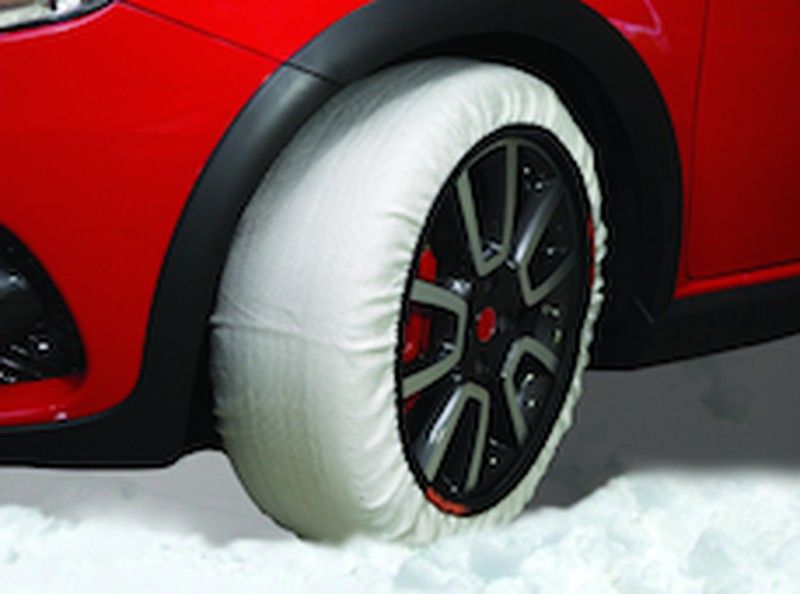
In the face of adverse winter weather forecasts, with the possibility of heavy snowfall or low temperatures, causing frost on the roads, we must prepare.
To do this, we must make sure that our vehicle has everything necessary to deal with this situation. Make sure you have the following in the vehicle:
- Chains or winter tires, to drive through sections where the accumulation of snow forces them to be used
- Enough fuel, filling the tank
- Flashlight
- Food, in case we get stuck for hours on a stretch of road
- Warm clothing, to withstand the low temperatures inside the vehicle, if we have to stop it
- Tweezers, in case it is necessary to revive the vehicle's battery
- A scraper, to remove ice or snow accumulated on the vehicle
- Triangles, to signal our vehicle in case of stopping it
- Mobile phone and car charger
Before leaving, make sure your vehicle is in perfect condition, checking the condition of the tires and their pressure. In addition, you should check the antifreeze fluid level and that the brakes are in perfect condition.
As always, when driving, you must adapt your speed to the circumstances of the road you are driving on. Driving at a moderate speed will allow you to detect possible ice sheets and avoid them. Ice sheets are very common in areas of the road located in the shade.
Every so often, stop the vehicle and remove any snow that has accumulated on the windshield and fenders.
If the chains are required to circulate, remember that you must put them on the drive wheels of your vehicle.
Finally, in sub-zero temperatures, do not use the parking brake. The pads could stick to the discs and make it difficult to start when trying to restart the vehicle.
In case of snowfall, the DGT establishes a series of mandatory measures, which vary depending on the amount of snow accumulated on the roads. A color code has been established, with four different levels:
Green level: It is the first level, applicable when it starts to snow in an area. Do not exceed 100 km/h on highways and dual carriageways, nor 80 km/h on other roads. Trucks can only drive in the right lane and are not allowed to overtake. It is recommended to be attentive to the evolution of the weather forecasts and the creation of ice sheets on the road.
Yellow level: This level is applied when there is curdled snow on the asphalt. Both trucks and articulated vehicles are prohibited from circulating. Passenger cars and buses can circulate, but limiting their speed to a maximum of 60 km/h. You must reduce your speed when you reach curves and inclines, do not make sudden maneuvers, increase the safety distance and, in case of worsening conditions, stop at a service area.
Red level: It is the level that is applied when the road is completely covered with snow. In this situation, only circulation with chains or winter tires is allowed. The maximum speed allowed in this case is only 30 km/h. Trucks and articulated vehicles are prohibited from circulating. To put the chains, make sure you stop your vehicle in a safe place, visible to other drivers and not in their way.
Black level: this level indicates areas where circulation is impossible due to the large accumulation of snow on the asphalt.
Other related articles
 Aug. 24, 2026
AI-powered cameras in Catalonia: Distraction controls on the A-2 and AP-7
For a professional driver, maintaining their license points and avoiding penalties is … Aug. 5, 2026
Solar eclipse 2026: traffic restrictions update
Traffic restrictions planned for the total solar eclipse on August 12, 2026, … July 22, 2026
2026 Solar Eclipse: Traffic Restrictions and Special Measures
The total solar eclipse of August 12, 2026, will be one of … July 10, 2026
Will breathalyzers be mandatory in 2026? Which vehicles are required to have them?
In recent days, numerous news reports have claimed that, from July 7, … June 15, 2026
Opinions of our clients
Receive our news