Changes to traffic regulations 2026: use of the shoulder in traffic jams
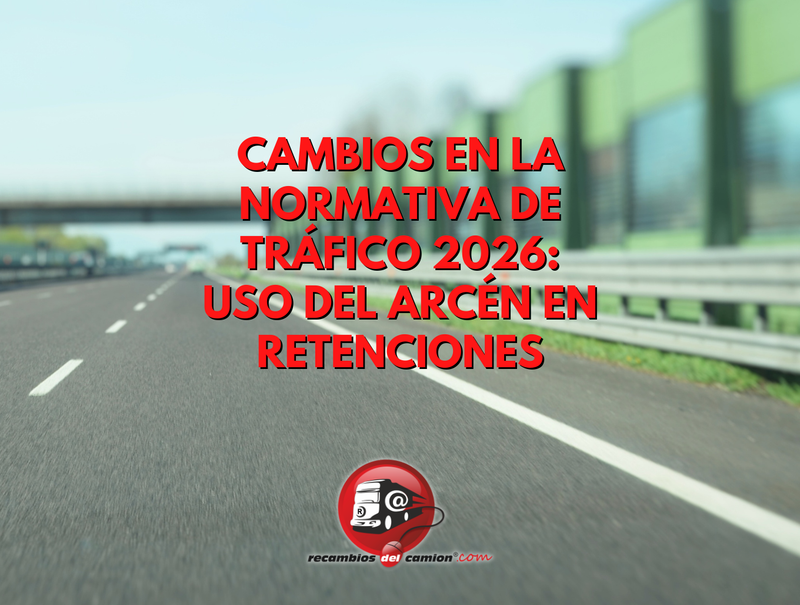
Starting in 2026, the Spanish Directorate General of Traffic (DGT) will generally allow certain vehicles to drive on the hard shoulder in cases of traffic congestion. This amendment to the General Traffic Regulations represents a significant change in traffic management and could have a positive impact on the mobility of millions of drivers.
Until now, passenger cars were not allowed to drive on the hard shoulder, except for justified reasons. With the new approach, its use will be permitted on specific sections of road and under clear conditions: adequate signage and a maximum speed of 30 km/h.
The current regulation is governed by Royal Decree 1428/2003, which approves the General Traffic Regulations. Specifically:
- Article 36: requires mopeds, bicycles, animal-drawn vehicles, special vehicles up to 3,500 kg, and other specific vehicles to travel on the shoulder when it is passable.
- For all other vehicles, such as passenger cars, traveling on the shoulder is prohibited except in emergency situations.
The rule is clear: the shoulder is reserved for very specific uses, and its improper use can result in serious penalties.
The DGT (Spanish Directorate General of Traffic) has confirmed that, with the new modification, driving on the hard shoulder will be permitted in traffic jams and on specific sections designated by signage.
Key points of the change:
- Maximum authorized speed: 30 km/h.
- Specific application: only in traffic jams and where specifically authorized.
- Objective: to improve traffic flow and reduce the negative effects of traffic congestion.
This is not a one-off recommendation: this modification will be part of the Regulations and applicable throughout the national territory, provided the indicated conditions are met.
This future regulation originated from a pilot program carried out on the AP-4 motorway, on the section between Dos Hermanas and Seville. On that stretch, for several months, the use of the shoulder was permitted for passenger cars in cases of traffic jams, with positive results.
The measure was promoted by the Ministry of Transport and Sustainable Mobility and the DGT (Spanish Directorate General of Traffic), and has served as a reference for extending the change to the rest of the road network.
- You will not be able to drive freely on the hard shoulder: only in designated sections with clear signage.
- The speed limit is 30 km/h.
- This measure is not immediate: it will come into effect in 2026, once the regulatory amendment is officially approved.
- The DGT (Spanish Directorate General of Traffic) will provide updated information through its official channels and on the variable message signs of the affected highways and motorways.
From a logistical point of view, the measure offers clear advantages:
- Reduced delays and better delivery forecasting.
- Optimized routes in urban areas where frequent traffic jams occur.
- Less wear and tear on vehicles by reducing continuous stops and starts.
- Potential to offer a more competitive and punctual service to customers.
Using the hard shoulder in case of traffic jams, a practice currently prohibited except in certain circumstances, will become a legal tool to improve mobility on highways starting in 2026. If implemented correctly, it can benefit private drivers, transport fleets, and logistics operators.
However, compliance with the regulations will be key: simply driving on the shoulder because there is a traffic jam will not be enough; it will need to be authorized, signposted, and the speed limit must be respected.
Once the amendment is published in the Official State Gazette (BOE), it will be essential that all transport professionals are informed and adapt their protocols accordingly.
Other related articles
 Aug. 24, 2026
AI-powered cameras in Catalonia: Distraction controls on the A-2 and AP-7
For a professional driver, maintaining their license points and avoiding penalties is … Aug. 5, 2026
Solar eclipse 2026: traffic restrictions update
Traffic restrictions planned for the total solar eclipse on August 12, 2026, … July 22, 2026
2026 Solar Eclipse: Traffic Restrictions and Special Measures
The total solar eclipse of August 12, 2026, will be one of … July 10, 2026
Will breathalyzers be mandatory in 2026? Which vehicles are required to have them?
In recent days, numerous news reports have claimed that, from July 7, … June 15, 2026
Opinions of our clients
Receive our news