AdBlue, what is it and how does it work in the engine?
Now that news arrives about stoppages in the production of AdBlue in Europe and the possible shortage and price increase of this additive, basic in many vehicles, we summarize how the situation is today.
In addition, we explain everything about this additive: what it is, how it manages to reduce emissions and what failures it has caused since its launch, analyzing the brands with the most and least failures and their cost.
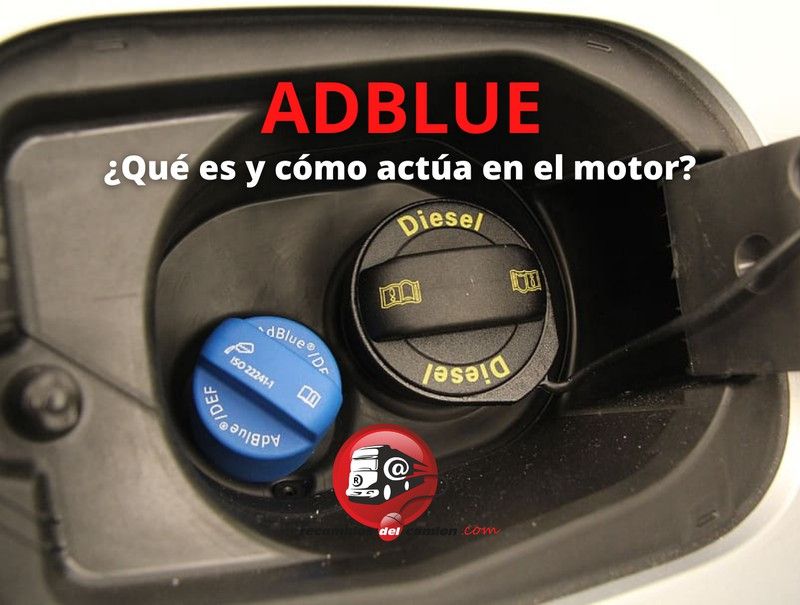
AdBlue is an additive used by modern diesel vehicles and created to reduce nitrogen oxide (NOx) emissions into the atmosphere.
With the entry into force of the Euro 6 regulation in 2014 in Europe, which limited the NOx emissions allowed per vehicle, the brands, in order to adapt their diesel models to the regulations, were forced to find a solution that would limit these emissions.
The solution, or at least the best alternative they found, was AdBlue.
AdBlue is a mixture of water and urea that is injected into the vehicle's exhaust system, before the NOx selective catalytic reduction device, or SCR system. This causes the exhaust gases to react with the AdBlue, converting a large part of the NOx generated, approximately 90%, into a much less harmful mixture, made up of nitrogen and water.
The advantages have become clear: drastically reduce the emission of NOx into the atmosphere. But are there downsides? There are.
A first disadvantage is that the vehicles that use it must have a tank and a specific filler neck for AdBlue. This means being aware of another level, in addition to the level of diesel en route. And to assume more repairs, since more systems logically entails more breakdowns.
Also, when refueling you have to be careful. AdBlue is corrosive and therefore, if spilled, it can cause damage to the vehicle's skin or paint. In the event of a leak in the AdBlue system, it can also cause corrosion or damage to other vehicle components.
Another disadvantage is that, at low temperatures, from -10ºC, it forms crystals that can clog the AdBlue pipes or injectors, as well as damage the pump designed to move it through the system to the exhaust.
And the main disadvantage is that if you run out of AdBlue, your vehicle will not work. In relation to this, it is betting on diesel fuels that incorporate AdBlue among their components, thus eliminating the need to refuel AdBlue separately.
The European Commission has warned about three models that could have problems in their AdBlue injection system. These problems were detected and reported by the French State and all three have to do with obstructions that occur in the injectors, causing NOx emissions above those allowed. The notices refer to the Peugeot 2008 V2, DS3 Crossback and Opel Grandland X models.
In addition to these specific problems, the AdBlue system, as we mentioned earlier, is a new source of vehicle breakdowns. By having a series of components necessary for its function, such as the pump, the tank, the injectors or the catalytic converter, the probability of vehicle breakdown increases.
To quantify this, let's see how much the most common repairs related to AdBlue cost: The replacement of an AdBlue tank can be around 400 euros on average and the replacement of an injector can cost around 180 euros.
According to a ThotData study, the brands with the most breakdowns related to AdBlue are Citroën and Peugeot, with 34.2% and 24.9% of the total breakdowns studied. This study has used the data of 12,692 breakdowns, related to the SCR system, repaired in 477 different workshops.
The brands that present data below the average in terms of breakdowns are Volkswagen, Seat, Renault, Ford and, mainly, Toyota.
The average repair cost is more expensive in the Peugeot, Citroën and Toyota brands. The brand with the cheapest repairs in the SCR system is Ford.
The obligation to reduce NOx emissions imposed by the European Union forced brands to incorporate the AdBlue system in models that had been designed without this system. This caused problems in the first models that mounted it, some assumed by the brands and repaired under warranty, at no cost to the vehicle owner.
This addition to already designed models also caused some inconvenience as, in some models, the AdBlue filler neck was in the trunk.
Currently, the models were already designed with this system in mind and many of the problems have been solved.
The three largest AdBlue producers in Europe have stopped production due to rising gas and electricity costs.
This has caused its price to rise and fear of lack of supply has begun to spread. Many carriers are stockpiling AdBlue to avoid problems.
The Slovak government recently ensured the supply to its carriers and individuals by acquiring 500,000 liters
In Italy, the main carrier union has warned of a possible shortage, after the stoppage of production for a month of the main product of AdBlue in Italy, the Norwegian Yara. AdBlue has doubled its price in Italy, going from €250 per 1,000 liters to €500.
In Spain the main producer is Fertiberia, located in Palos de la Frontera (Huelva), announced that it would stop production in October and November.
The technology and efficiency of engines continues to advance and work is already under way on engines that comply with current emission regulations, without the need for additives such as AdBlue. These new engines, more respectful of the environment, will eventually eliminate this additive, the breakdowns that derive from it and the dependence on diesel engines.
Other related articles
 Aug. 24, 2026
AI-powered cameras in Catalonia: Distraction controls on the A-2 and AP-7
For a professional driver, maintaining their license points and avoiding penalties is … Aug. 5, 2026
Solar eclipse 2026: traffic restrictions update
Traffic restrictions planned for the total solar eclipse on August 12, 2026, … July 22, 2026
2026 Solar Eclipse: Traffic Restrictions and Special Measures
The total solar eclipse of August 12, 2026, will be one of … July 10, 2026
Will breathalyzers be mandatory in 2026? Which vehicles are required to have them?
In recent days, numerous news reports have claimed that, from July 7, … June 15, 2026
Opinions of our clients
Receive our news