News - Page 6
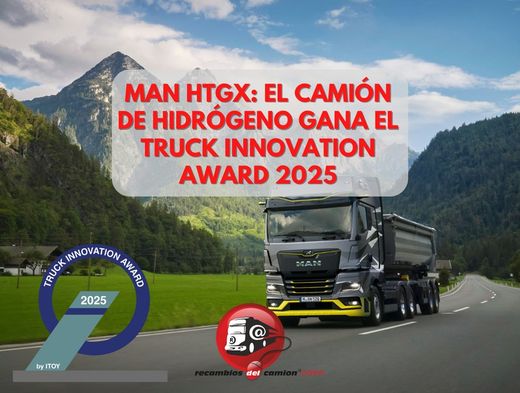
MAN hTGX: Hydrogen truck wins Truck Innovation Award 2025
In today's freight transport landscape, innovation is key to reducing emissions and moving towards a more sustainable future. One of the companies leading this change is MAN Truck & Bus, which has been awarded the Truck Innovation Award 2025 for the third time. The award was given at the IAA Commercial Vehicles trade fair, one of the most important events in the sector. On this occasion, the company has been recognised for its hydrogen-powered truck, the MAN hTGX, a vehicle that promises to revolutionise heavy transport with its zero-emission technology.

Sustainable trucks: the role of renewable fuels
Road freight transport is a key part of the global economy, but also one of the main contributors to CO₂ emissions. The search for solutions to mitigate the environmental impact of this sector is essential, and renewable fuels are positioning themselves as one of the most viable alternatives in the short term. In this article, we will delve into how renewable fuels represent an immediate response to the challenge of reducing emissions in truck transport and why their adoption is crucial in the transition towards a more sustainable future.

Essential tips for safe driving in extreme heat
In August, with extreme heat, Northgate details a series of actions aimed at both private and professional drivers to make their journeys safer and avoid unexpected incidents at the wheel. We are in the middle of summer and with thermometers reaching 40 degrees. These are the dates when long-distance journeys by car increase due to summer holidays or to make short getaways near the place where one lives. Professionals who use the vehicle for their work also have to deal with high temperatures when they get behind the wheel at this time. The intense heat affects the driver and, by default, driving.Every summer, the DGT reminds us that driving in excessive heat inside the vehicle can increase the risk of having an accident by up to 20%. The heat can cause fatigue and drowsiness, it reduces reflexes and concentration on the road, so that the response capacity is delayed and more errors can be made at the wheel. High temperatures cause drivers to become more irritable and nervous. But it doesn't just affect the driver, it also affects the passengers and the vehicle itself, which can suffer consequences during the journey.To ensure that journeys are carried out without unforeseen events and with the greatest safety, Northgate Renting Flexible, a leading company in flexible vehicle rental in our country, reminds us that we must not let our guard down in the face of the heat and advises carrying out these useful actions when driving during these stifling days.

The monumental transport of the German submarine U17: A logistical feat
The road transport of a World War II submarine has become a historic event that has captured the attention of thousands of people around the world. This colossal U-boat, 50 metres long and weighing 350 tonnes, made an impressive 39-kilometre journey to its final destination at the Technik-Museum in Sinsheim. The logistical feat, which included crossing rivers and adapting roads, was broadcast live on YouTube, allowing viewers to follow every detail of this unique operation. Find out how this incredible challenge was achieved!
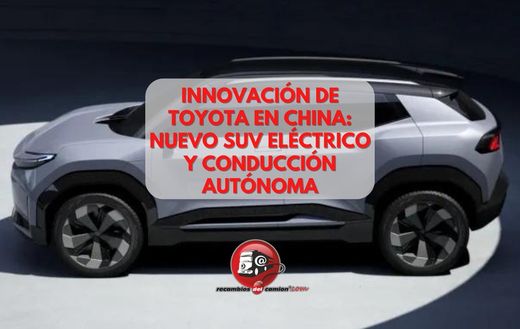
Toyota Innovation in China: New Electric SUV and Autonomous Driving
Toyota, one of the giants of the automotive industry, is preparing a significant launch in the Chinese market: an electric SUV with advanced autonomous driving systems, scheduled for 2025. This strategic move seeks to position the brand on par with competitors such as Tesla in a market where demand for electric vehicles (EV) is booming.

MAN recalls more than 120,000 vehicles due to risk of fire in Euro 6c engines
German truck and bus manufacturer MAN has announced the recall of more than 120,000 vehicles fitted with Euro 6c engines due to fire risks. These engines have shown a susceptibility to damage that can lead to fires, especially in vehicles with high mileage and contaminated oil. This article takes an in-depth look at the reasons for the recall, the measures taken by MAN, and the implications for owners of these vehicles.

Truck breakdowns: identify and solve common problems
Truck drivers are a fundamental part of the transportation industry, and their job involves facing numerous challenges on the road. One of the most significant challenges is common truck breakdowns. These breakdowns can cause delays in the delivery of goods and costly repair costs. In this article, we'll explore some of the most common breakdowns truck drivers face in their vehicles and provide tips on how to prevent and fix them.
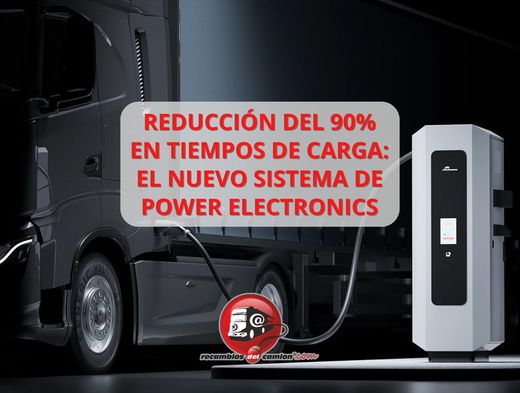
90% reduction in charging times: The new Power Electronics system
The technology multinational Power Electronics has launched an ultra-fast charger for electric trucks that promises to revolutionize the transportation sector. This innovative system reduces recharging times by 90%, allowing heavy electric vehicles to charge their batteries from 10% to 80% in approximately 30 minutes, a substantial improvement compared to current charging times that vary between 1.5 and 7 hours.
Trucks on the ITV: almost a third suspend it
Currently, trucks are the vehicles that fail the most in the Technical Vehicle Inspection (ITV) in Spain. According to data provided by the Ministry of Industry and Tourism, 29% of commercial vehicles weighing more than 3,500 kg do not pass the first inspection. This worrying rejection rate is closely linked to the aging of the automobile fleet in the country.
Opinions of our clients
Receive our news